


















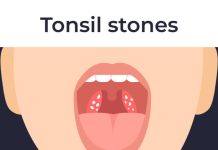



Tonsil stones, also known as “Tonsilloliths,” are tiny masses of solidified substance that can occur in the tonsils. They are more prevalent in adults than youngsters and can lead to poor breath. The stones are often little, and it is uncommon to have a big tonsil stone. Tonsil stones can be managed with good oral hygiene, including gargling warm salt water. Your doctor could advise surgery if the tonsil stones keep returning or are troubling you. Let’s discuss tonsil stones, their causes, diagnosis, and treatment.
What are tonsil stones?

Have you ever noticed any yellowish-white spots on your tonsils? If so, then you have a prevalent issue called Tonsil stones.
Tonsil stones or Tonsilloliths appear as tiny white or yellow pebbles on your tonsils. There could be one tonsil stone or several. The majority of the time, tonsil stones are small, but seldom larger ones might occur.
What causes tonsil stones?
Your tonsils consist of crannies, tunnels, and pits called tonsil crypts. Different substances can get trapped in it, such as food particles, bacteria, mucus, dead cells, saliva, etc. These substances build on to become hardened or calcified, resulting in stone formation. Also, people with chronic tonsil inflammation or recurrent tonsillitis experience this the most frequently.
Additionally, possible causes of tonsil stones include:
- Poor oral hygiene
- Calcium deposition
- Chronic tonsillitis
- Persistent sinus problems
- Tonsillitis-causing bacteria or fungi can also develop tonsil stones.
What signs and symptoms indicate tonsil stones?

Even though tonsil stones are hard to see, they can still produce apparent symptoms. Tonsil stone symptoms can include:
- Foul breath (Halitosis)
- Unpleasant mouth taste
- Sore throat
- Ear ache
- Swallowing difficulties (Dysphagia)
- Cough
- White or yellow pebble-sized lumps on your tonsils
- Inflamed tonsils
How are tonsil stones diagnosed?

Tonsil stones are typically detectable via physical examination by your doctor, or if they are hidden in the folds of your tonsils, you may require imaging tests like CT or MRI scans.
How are tonsil stones treated?
Tonsil stones typically don’t need to be treated because they separate from the tonsils on their own and can be ingested unnoticed. However, specific therapies could be advised if tonsil stones are causing pain, discomfort, or poor breath. Make sure to:
- Keep your mouth healthy by daily brushing and flossing
- Gargle with warm salt water
Tonsil stone removal using natural methods
You can try out the following at-home remedies to remove tonsil stones:

Gargling: gargling with warm, salty water can help dislodge stones and lessen tonsillitis pain. Additionally, it can aid in removing the smell that tonsil stones may cause. Warm up 8 ounces of water with 1/2 teaspoon salt, then gargle with it.
Coughing: Some people discover that a forceful cough might cause stones to become loose and come up.
Brush regularly: Good oral care is essential. If you want to combat the symptom of tonsil stones, such as bad breath, brush daily.
Remove manually: Tonsil stone removal by hand can be dangerous and result in consequences, including bleeding and infection. If you must test something, it is preferable to do it gently with a cotton swab or a water pick.
Yogurt: It could be possible to fight off the bacteria that cause tonsil stones by consuming probiotic-rich yogurt.
Carrots: Saliva production and the development of natural antibacterial activities are both enhanced when eating carrots. Your tonsil stones can disappear or lessen as a result of this.
What medications are used to treat tonsil stones?

Your doctor will inform you if you require medications to treat tonsil stones. Physicians rarely administer drugs because these drugs don’t address the root cause of tonsil stones.
But sometimes, healthcare providers prescribe antibiotics or anti-inflammatory drugs such as corticosteroids to treat tonsil stone flares and swelling. However, these drugs should only be used temporarily and should not be taken long-term.
Is it possible to remove tonsil stones surgically?
Medical professionals may advise surgical tonsil stone removal if tonsil stones are:
- Large
- Causing discomfort or other issues
- Resulting in repeated tonsillitis or sore throats
Tonsillectomy
Medical professionals occasionally advise the surgery for the complete removal of the tonsils. Tonsil stones that keep returning or that are causing recurrent infections may benefit from this surgery.
Coblation Cryptolysis
In this technique, tonsil crypts and crevices are removed by surgeons using saline and radiofrequency energy. There is a lesser chance of some complications since surgeons can perform this treatment at a lower temperature.
Laser tonsil Cryptolysis
The tonsil stone crypts are demolished during this procedure using a laser. The use of local anesthesia is frequently used for this surgery. In most cases, the discomfort and healing period are short.
How can I prevent tonsil stones?
There are things you can take to avoid tonsil stones:
- Quit smoking
- Brush and floss daily
- Gargle with warm salt water
- Avoid sugary beverages.
- Drink plenty of water
- Use a water pick to dislodge tonsil stone and clean your mouth.
What are the complications of tonsil stones?

Tonsil stone complications are uncommon, although they are conceivable. One of the most severe complications from tonsil stones is a deep infection of the tonsils called an abscess.
Tonsil stones might occasionally make you more susceptible to tonsillitis (inflammation or infection of your tonsils). In rare instances, if the growths are large, they may result in issues with breathing or swallowing.
Bottom line

Tonsil stones are a typical issue. Tonsil stones rarely cause significant consequences but can cause symptoms such as bad breath, swallowing problems, ear pain, etc.
Usually, you can attempt home remedies like saltwater gargles to remove tonsil stones. Consult your physician if trying to remove the stones at home is unsuccessful or if they keep reoccurring. You may need to remove your tonsils (tonsillectomy) if they bother you.
FAQs
Q: Are tonsil stones common?
A: Tonsil stones are a common concern. Tonsil stones rarely cause significant consequences, but they can cause numerous symptoms. If you frequently get tonsil stones, maintain proper dental hygiene and drink enough water. Consult your doctor if they start to cause problems or if you have any concerns.
Q: What are the causes of tonsil stones?
A: Food scraps, bacteria, and mucus caught in tiny nooks on your tonsils can result in tonsil stones. Due to poor dental hygiene practices or the design of a person’s tonsils, particles and bacteria may become stuck. This trapped material can lead to swelling and pain.
Q: What is the main symptom of tonsil stones?
A: Foul Breath – one of the main symptoms of tonsil stones is bad breath.